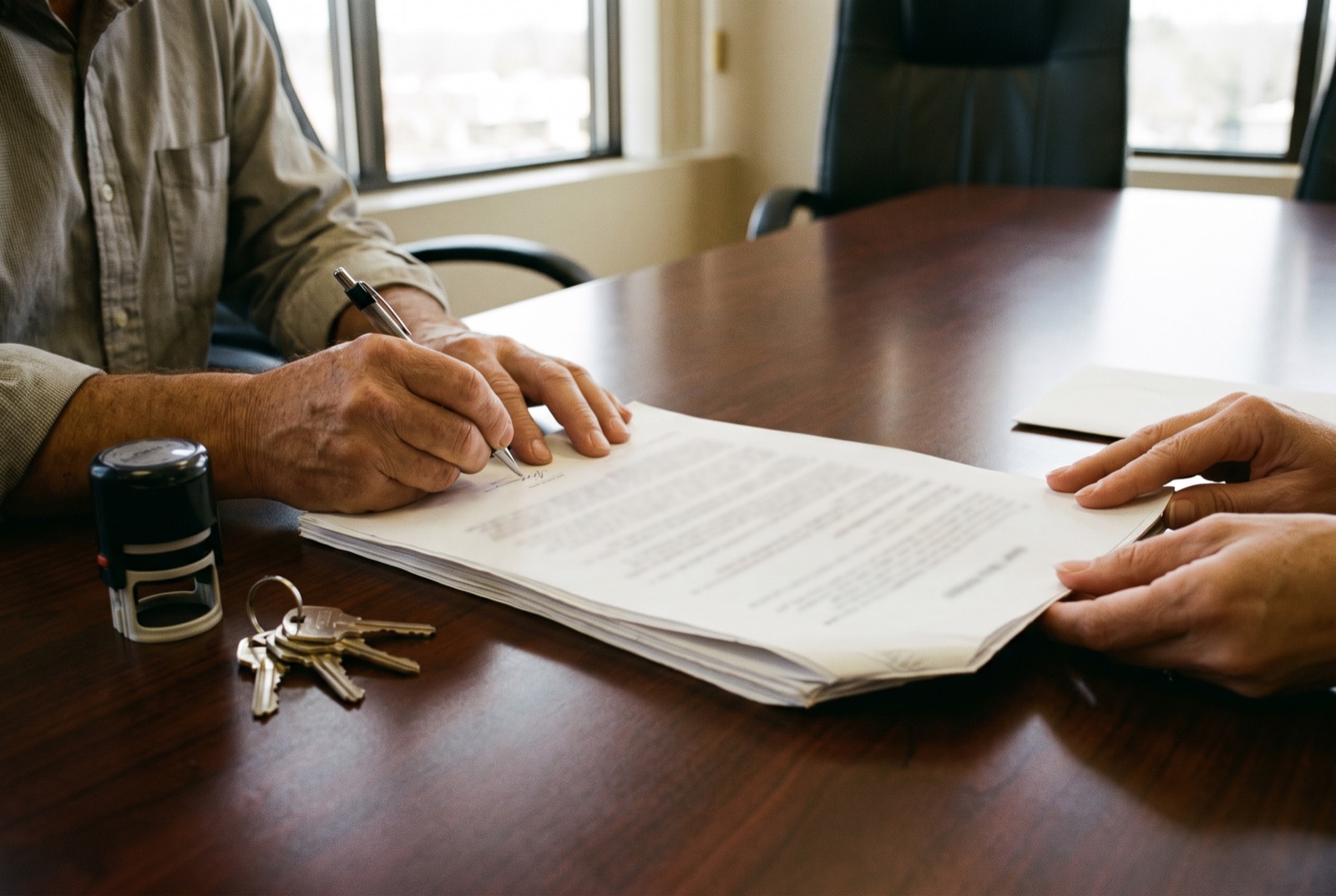
An affixation report is a PE-sealed document certifying that a manufactured home is permanently attached to its foundation and legally converted from personal property (chattel) to real property — so it can be titled, financed, refinanced, or sold as real estate. In practice it pairs a PFGMH foundation certification with a recorded Affidavit of Affixation.
An affixation report is the engineering evidence that a manufactured home is permanently attached to its foundation, so it can be treated as real estate. A manufactured home leaves the factory as personal property — titled like a vehicle, with a DMV certificate of title. Before it can be mortgaged, refinanced, or sold as real estate, that title has to be retired and the home legally tied to the land. The report is what makes that conversion stick.
The home is titled like a vehicle. A lender can only make a chattel (personal-property) loan against it, usually at a higher rate and shorter term. FHA, VA, and USDA real-property programs are off the table.
The certificate of title is surrendered and the home becomes part of the real estate. It can now carry a real-property mortgage, be refinanced, sold with the land, and be taxed as real property.
In real estate, "affixed" means attached to land so firmly that the item is treated as part of the land rather than as separate movable property. A manufactured home is titled as personal property until it is permanently attached to the land; once it is, it can become part of the real estate. The report documents the evidence: pier and footing specs, anchoring, soil bearing, permanent utilities, and skirting.
A complete affixation report is built from two PE-sealed instruments that do different jobs — one structural, one legal.
The affidavit of affixation is one instrument inside the broader affixation report, and the foundation certificate is another. People use the terms interchangeably, but they do different jobs: the certification is the engineering evidence, and the affidavit is the sworn declaration that gets recorded. Most files need both; a few edge cases, like a refinance on an already-converted home, need only one. Ask your lender or title team which documents they require, because the exact requirements depend on the transaction and jurisdiction. For a closing-side checklist, read the affidavit of affixation checklist for title companies.
Lenders, title companies, closing attorneys, and homeowners ask for one whenever a manufactured home is changing hands or changing loans and needs to be real property.
FHA, VA, and USDA real-property mortgages require proof the home is permanently affixed. The report clears underwriting.
Title companies and escrow officers need the recorded affidavit to insure the home as real estate and surrender the old certificate of title.
Closing attorneys rely on the statute-correct affidavit so the conversion holds up and the deal records cleanly.
The cost depends on which documents your file needs, the property location and recording county, the closing timeline, and the scope your lender or title team requires. To get a quote, submit the address, the recording county, and the target close through the request form. Quote same business day.
Submit the address, the recording county, and the target close. Acknowledgment within one business day. Quote same business day. Recorder-ready PFGMH certification and Affidavit of Affixation within five business days.
A new conventional financing path may require a post-move structural integrity inspection.
Get the moved-home structural integrity report →